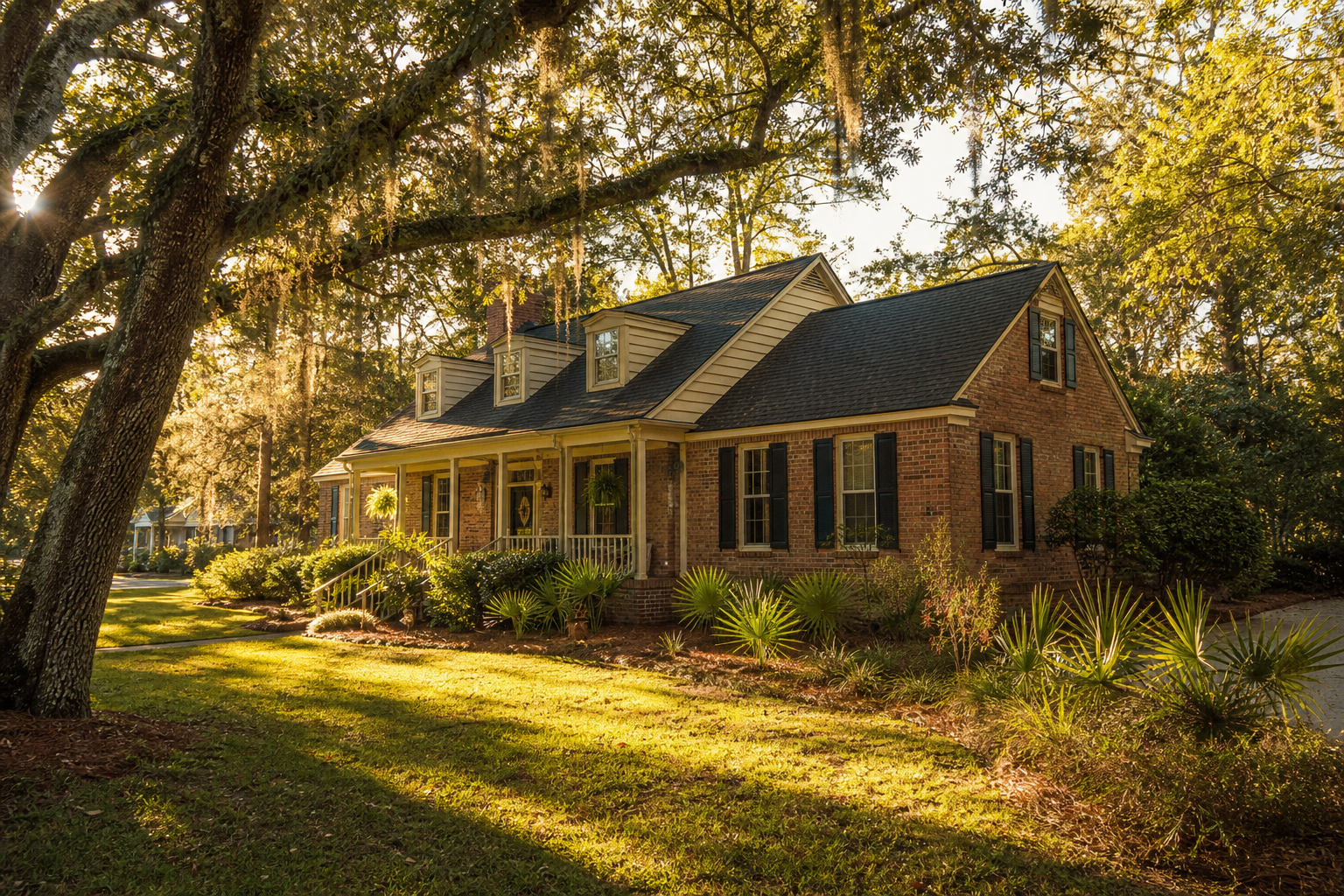
If you have owned your Charleston home for 20 or 30 years, what should you know before putting it on the market?
You should understand the tax implications of your accumulated equity, prepare for a market that has more competition than last year, and build a plan that addresses where you are going next before you focus on what you are leaving behind.
Why This Matters Right Now in Charleston, SC
If you bought a home in Charleston, Mount Pleasant, or Summerville in the late 1990s or early 2000s, you are likely sitting on significant equity. That is the good news. The part that catches many sellers off guard is how much planning goes into turning that equity into real, after-tax money in your pocket.
The Charleston Trident MLS showed 4,132 single-family homes for sale as of September 2026, up 9.4% year-over-year, according to the Charleston Trident Association of REALTORS®. That means your home is entering a market with meaningfully more competition than a year ago. In my experience, long-tenured sellers sometimes assume the market will do the heavy lifting because values have risen so much. But capturing that equity depends on execution: pricing, preparation, timing, and tax planning all have to work together.
With 7 years of experience and over 107 closed transactions across this market, this is one of the most important conversations I have with my clients. Let me walk you through exactly what I cover.
Understanding Your Capital Gains Before You List Your Charleston Home
This is always where I start the conversation. Before we talk about paint colors or landscaping, you need to understand what happens to your profit at closing.
The Federal Exclusion Has a Ceiling
Under Section 121 of the Internal Revenue Code, you may be able to exclude up to $250,000 of capital gain from the sale of your primary residence if you file as a single taxpayer, or up to $500,000 if you are married filing jointly. These figures come from IRS Publication 523 for the 2025 tax year. I recommend confirming with your CPA whether any legislative changes apply for the 2026 tax year, but as of this writing, these thresholds have not changed.
Here is where it gets real. If you purchased a home in Mount Pleasant for around $180,000 in the late 1990s and it sells today in the range of $700,000 or more, your gain could approach or exceed that $500,000 joint exclusion. The amount above the exclusion would generally be subject to long-term capital gains tax. Your actual tax depends on your adjusted basis (which includes certain improvements you have made over the years), your filing status, and your applicable tax rate, so this is a conversation you need to have with a qualified CPA before you list.
You Probably Qualify, But Check Anyway
To claim the exclusion, you need to have owned and used the home as your main residence for at least 2 out of the last 5 years, per IRS Publication 523 for the 2025 tax year. If you have lived in your Charleston home for decades without interruption, you almost certainly meet this test. But if you moved out at some point and rented the property, even for a few years, you need to verify that you still satisfy the two-year residency requirement within the five-year window ending on the date of sale.
What does this mean in practical terms? It means that before I even run comparable sales, I ask my clients to sit down with their tax advisor. The equity is real, but the amount you keep depends on planning you do before closing, not after.
The Widowed Seller Window That Many Charleston Families Miss
This is one of the most time-sensitive issues I see, and it is especially relevant for the 55-plus community in Charleston.
If your spouse has passed away, you may still qualify for the higher $500,000 exclusion rather than the $250,000 single-filer amount. According to IRS Publication 523 for the 2025 tax year, you may be eligible for the increased exclusion if you sell your home within 2 years of the date of your spouse’s death and have not remarried at the time of the sale. There are additional conditions, so I always encourage clients in this situation to verify their eligibility with an estate attorney or CPA.
That two-year window can close faster than you expect, especially when grief and the logistics of settling an estate are in the picture. If this applies to you, or to someone you care about in the Summerville or Mount Pleasant area, the timing of the sale becomes a genuine planning priority, not just a preference.
I would rather give you the full picture than a rosy one, so you can move forward with real confidence. That is something I believe deeply, and it is exactly why I bring up topics like this early.
How Charleston’s Current Inventory Affects Your Pricing Strategy
You have lived through multiple market cycles. So you know that markets shift. Here is where we are right now.
More Competition Across the Metro
As of September 2026, the entire Charleston Trident MLS carried 4,132 single-family homes for sale, up 9.4% year-over-year, per the Charleston Trident Association of REALTORS®. That is a meaningfully larger pool of options for buyers than they had a year ago, and it shifts negotiating leverage.
What does that mean for you? It means your home needs to stand out. Pricing discipline matters more in a market with rising inventory. If you overprice based on what your neighbor got 18 months ago, you risk sitting on the market while fresher listings draw buyer attention.
Mount Pleasant Is a Different Story
Interestingly, Mount Pleasant’s ZIP 29464 bucked the broader trend. That sub-market showed 137 active single-family listings in September 2026, down 2.1% year-over-year, per the Charleston Trident Association of REALTORS®. This is a good reminder that real estate is hyper-local. What is happening across the metro does not always match what is happening in your specific neighborhood along Shem Creek, in the Old Village, or in I’On.
This is exactly why I pull data at the neighborhood level, not just the metro level. When I sit down with a long-tenured seller, I want you to see the market the way a buyer walking through your front door sees it, not the way a headline describes it.
Preparing a Home You Have Loved for 20+ Years to Sell in Charleston
This part of the conversation requires honesty and empathy in equal measure. I understand that you are not just selling square footage. You are leaving behind the kitchen where holidays happened, the backyard where children grew up, the porch where you watched storms roll in off the harbor.
Deferred Maintenance Adds Up
Over decades of ownership, certain maintenance items tend to accumulate. A roof that was replaced 18 years ago. HVAC systems approaching end-of-life. Older electrical panels. Grout that has seen better days. None of these are deal-breakers, but buyers in 2026 are factoring repair costs into their offers.
My approach is to walk through the home with you and create an honest priority list. Not everything needs to be addressed, but you should know what a home inspector is likely to flag so there are no surprises during the due diligence period.
Staging Is Not Optional
I tell every long-tenured seller the same thing: your home needs to feel like the buyer’s future, not your past. That does not mean erasing your personality. It means editing. Removing excess furniture, decluttering closets, neutralizing bold color choices, and letting the bones of the home show through. In a market with 9.4% more inventory year-over-year across the Charleston Trident MLS, first impressions carry even more weight.
Planning Where You Are Going Next Before You Sell in Charleston
One of the biggest sources of stress I see is sellers who list their home without a plan for what comes next. Where are you moving? Are you staying in the Lowcountry? Downsizing to a condo downtown? Looking at active-adult communities in Summerville? Relocating out of state to be closer to grandchildren?
Sequencing Matters
In many cases, I help my clients figure out the “next chapter” logistics alongside the sale. Can you buy before you sell? Do you need a leaseback arrangement to give yourself time? Should we look at new construction timelines so your move-in date aligns with your closing?
As a Summerville new construction expert and Charleston relocation expert, I spend as much time helping clients plan their next move as I do marketing the home they are leaving. Having closed over 107 transactions, I have seen what happens when sellers plan ahead versus when they scramble. The difference in stress level, and often in financial outcome, is significant.
The Emotional Side Is Real
Selling a home you have owned for decades is not like selling a home you bought five years ago. The attachment runs deeper. I never rush that process. But I also believe that honest, straightforward guidance helps you move forward with clarity rather than anxiety. Rated 5.0 out of 5 stars by 33 past clients, I take that trust seriously, and it starts with being direct about what the process actually looks like.
Frequently Asked Questions About Selling a Long-Held Charleston Home
Do I have to pay capital gains tax on a home I have owned for 30 years in Charleston?
You may be able to exclude up to $250,000 of gain as a single filer or $500,000 as a married couple filing jointly, per IRS Publication 523 for the 2025 tax year. If your gain exceeds those thresholds, the amount above the exclusion is generally taxable. Your adjusted basis, which factors in qualifying improvements, affects your gain calculation. Confirm your specific situation with a CPA before listing.
How do I calculate my cost basis after decades of ownership?
Your cost basis starts with your original purchase price and generally increases by the cost of qualifying capital improvements (additions, major renovations, certain system replacements). It does not include routine maintenance or repairs. Gather receipts and records as far back as possible and bring them to your tax advisor for an accurate calculation.
What is the ownership and use test for the capital gains exclusion?
Per IRS Publication 523 for the 2025 tax year, you must have owned and used the home as your main residence for at least 2 of the 5 years preceding the sale date. If you rented the property or lived elsewhere for a period, verify that you still meet this requirement within the five-year window.
Does the $500,000 exclusion apply if my spouse recently passed away?
It may. According to IRS Publication 523 for the 2025 tax year, a surviving spouse may qualify for the $500,000 exclusion if the home is sold within 2 years of the spouse’s death and the surviving spouse has not remarried, among other conditions. Consult an estate attorney or CPA to determine eligibility.
Is Charleston’s market still good for sellers in 2026?
Inventory across the Charleston Trident MLS rose 9.4% year-over-year as of September 2026, per the Charleston Trident Association of REALTORS®. That means more competition for sellers than a year ago. However, sub-markets like Mount Pleasant ZIP 29464 saw inventory decline 2.1% over the same period. Conditions are hyper-local, and pricing precision matters more than ever.
Should I renovate before selling a home I have owned for decades?
Not necessarily. In my experience, a targeted approach works better than a full renovation. Focus on items a home inspector will flag, cosmetic updates that photograph well, and any deferred maintenance that could scare off buyers. Your dollar goes further on strategic updates than on a complete overhaul.
How long does it take to sell a long-held home in Charleston?
Timeline varies by neighborhood, price point, condition, and market timing. I do not have a metro-wide median days-on-market figure to cite here, but I can pull that data directly from the MLS for your specific area when we sit down together. The best way to shorten your timeline is to price correctly from day one.
Can I sell my Charleston home and buy a new construction home in Summerville at the same time?
Yes, and I specialize in exactly this kind of coordination. New construction timelines in Summerville can work in your favor because the build schedule gives you a known move-in date. We can often align your closing with the builder’s completion date to minimize disruption.
What if I used part of my home as a rental or home office?
If you used your home for business purposes or rented a portion at any point, the gain allocable to periods of nonqualified use may not be eligible for the exclusion, per IRS Publication 523 for the 2025 tax year. Additionally, any depreciation you claimed or were allowed after May 6, 1997, cannot be excluded. Bring your tax records to a CPA before listing.
How do I choose the right listing agent for a home I have owned for decades?
Look for an agent who leads the conversation with planning, not just marketing. You want someone who understands tax implications, can coordinate your next move, and who will be honest with you about pricing. With 7 years of experience, 107 closed transactions, and a 5.0-star rating from 33 reviews, I bring both the local expertise and the straightforward guidance that long-tenured sellers need.
The Bottom Line for Charleston Sellers Who Have Owned for Decades
Selling a home you have lived in for 20 or 30 years is one of the most significant financial and emotional decisions you will make. The equity you have built across Charleston, Mount Pleasant, or Summerville is real and substantial. But turning that equity into a successful outcome requires more than putting a sign in the yard. It requires tax planning, honest market analysis, strategic preparation, and a clear vision for what comes next.
I am Irina Bordyn, a REALTOR® with AgentOwned Realty Charleston Group and a recognized Realtor of Distinction. If you are thinking about selling a home you have owned for decades, I would love to sit down with you, walk through the numbers, and help you build a plan that protects what you have worked so hard to earn. You can reach me at 843-714-3806 or visit mynextcharlestonhome.com to start the conversation.